About
Georg Viktor was born in Ludwigshafen, Germany, in 1953. His first formal discipline was music, completing his state examination at the Staatliche Hochschule für Musik Heidelberg–Mannheim in 1976. Two years later he began private sculptural training with the sculptor and conservator Volker Dursy in Ladenburg. In 1979 he made the move that would decisively shape his life as a sculptor: he went to Pietrasanta, entering the working world of the marble studios and training at Studio Ferdinando Palla.
Continue Reading Below ↓
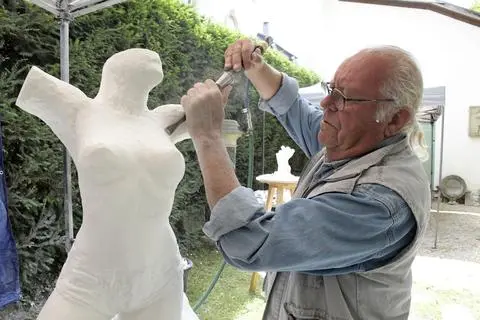
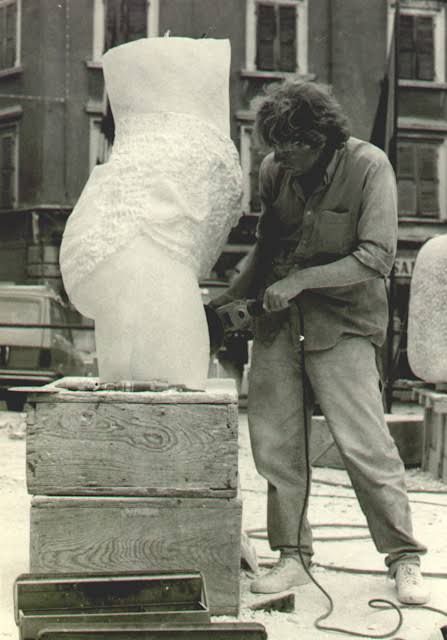
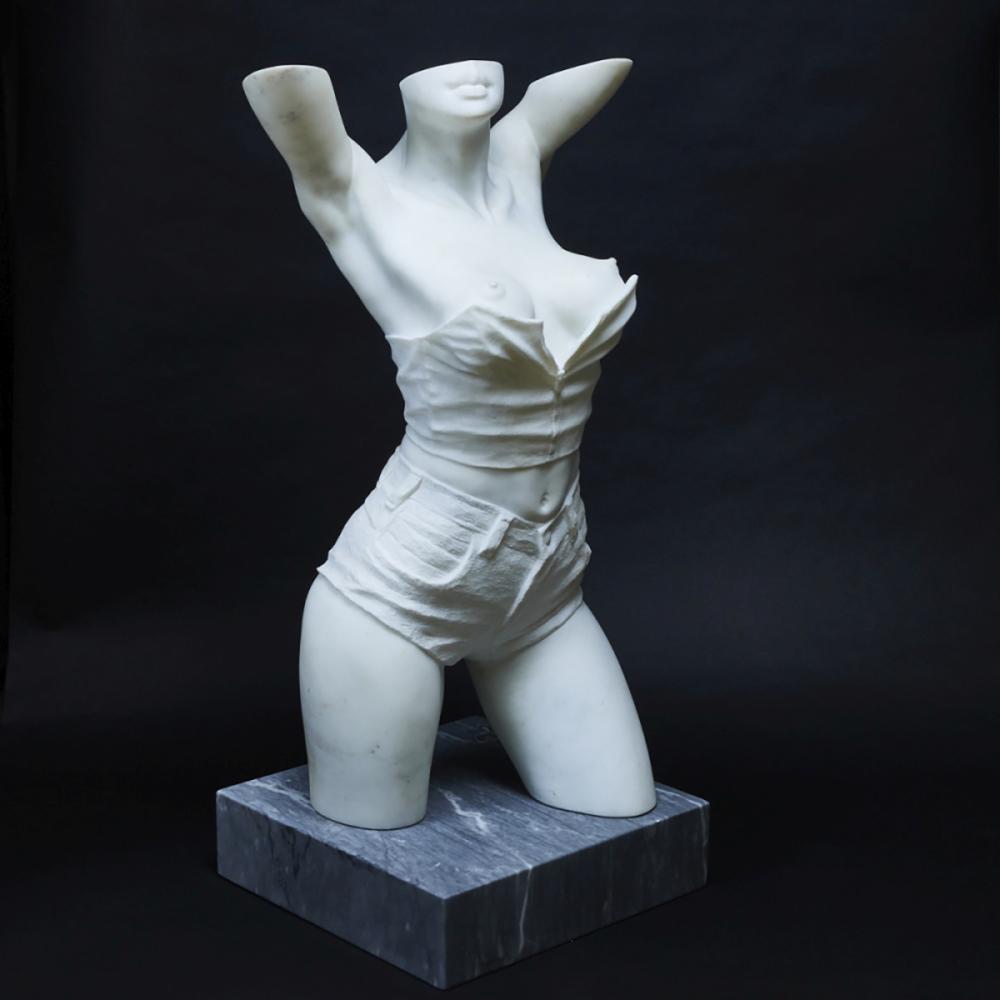
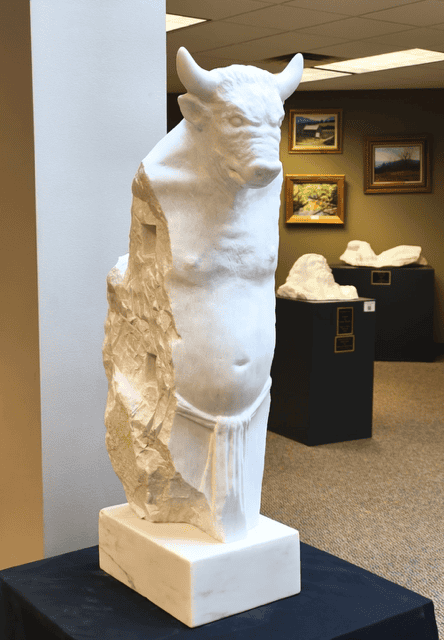
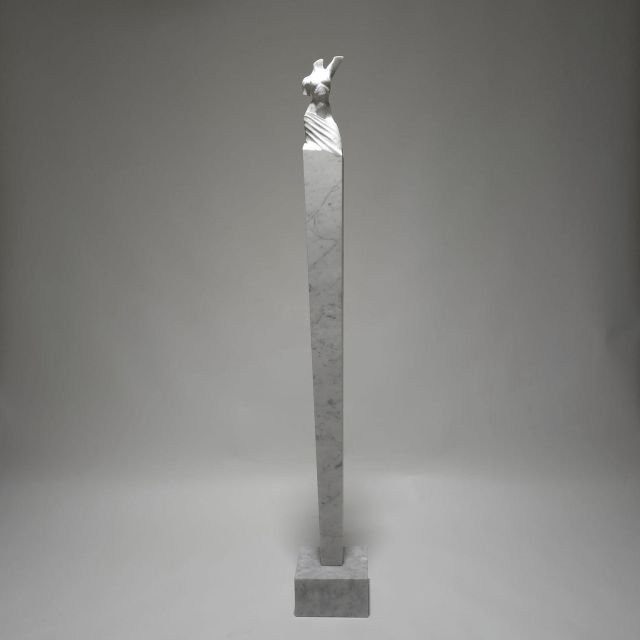
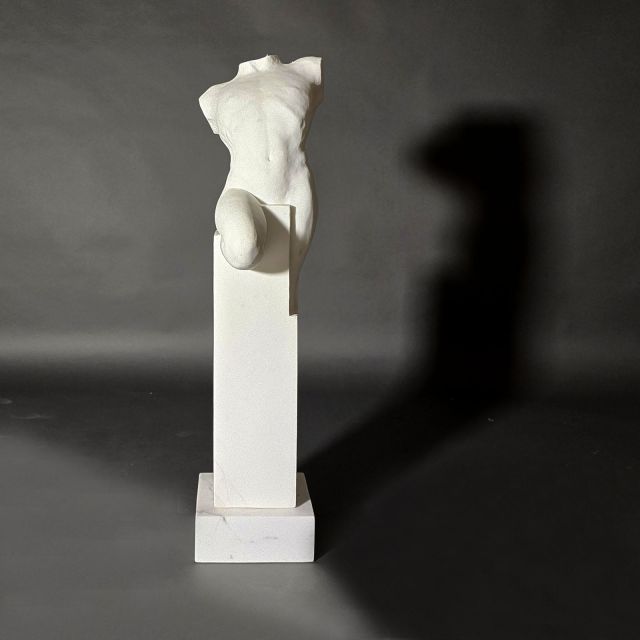
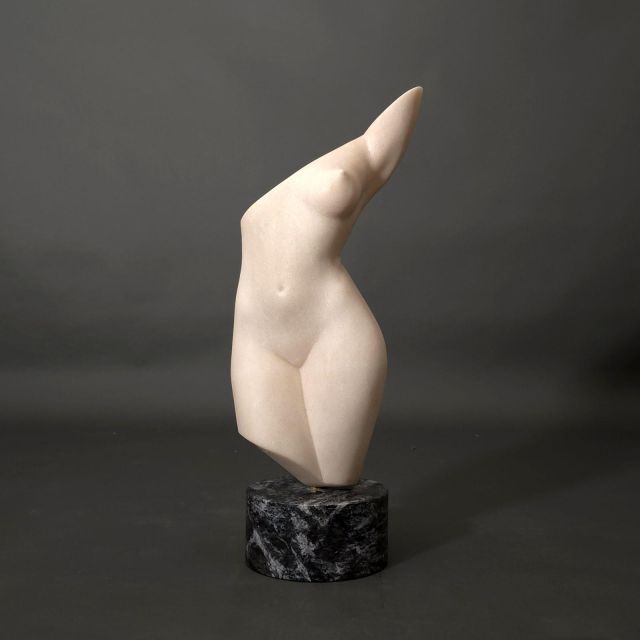
He has maintained his connection with Pietrasanta ever since, working between Italy and Germany while building a body of sculpture centered principally upon the human figure.
For Viktor, marble is not simply one material among many. His writing about stone reveals the attention of someone who knows it through the hand: the translucency and warm whiteness of Statuario, the character of Bardiglio, the way different surfaces respond to finishing, light, and the representation of flesh. His sculpture grows out of this intimate understanding of material.
The figure remains at the center of his work. The body is not treated merely as an anatomical problem or as a vehicle for style, but as a meeting place between proportion, sensuality, surface, mass, and stone. His sculptures retain the unmistakable presence of carving—the awareness that the form has been discovered through removal rather than simply transferred from another medium.
Viktor’s place within the living marble tradition is also reflected in his association with Cuturi, the Italian manufacturer whose pneumatic carving hammers have long been part of the working culture of stone sculpture. His work has been featured by Cuturi on its own website. That connection is particularly appropriate: Viktor belongs not only to the exhibition world of finished sculpture, but to the workshop culture of chisels, pneumatic hammers, marble dust, blocks, and craftsmen from which the sculpture actually emerges.
A Sculptor I Noticed
I became aware of Georg Viktor many years ago for a very particular reason.
At a time when much contemporary figurative sculpture seemed increasingly dependent upon modeling, enlargement, casting, mechanical reproduction, or the translation of a finished model into stone by others, Viktor appeared to me to be doing something both old and strangely new again.
He was directly carving the human figure in stone.
I would not claim that direct carving had disappeared, nor that Viktor alone restored it. But among the contemporary sculptors I encountered, he was one of the first I noticed returning seriously to that older relationship between sculptor and block: the figure developing through the decisions made directly in the stone itself.
That distinction matters.
Direct carving changes the nature of the conversation. There is no completely predetermined object waiting merely to be copied. Each blow establishes a fact that cannot simply be replaced. The sculptor must look, judge, strike, reconsider, and continue. The resistance of the material becomes part of the formation of the sculpture.
Georg Viktor has continued that conversation for decades.
Perhaps what is most characteristic about him is that he does not seem particularly interested in presenting himself as the defender of a tradition. He is a quiet man and does not readily talk about himself. There is no manifesto announcing the survival of marble carving.
He simply does the work.
And perhaps that is why I noticed him.
Georg Viktor belongs to that quieter continuity of sculpture in which tradition is preserved not by declaration, but by practice. The human figure, the block of marble, the tools, and the intelligence of the hand remain sufficient.
For more than forty years, he has continued one of sculpture’s oldest conversations: the sculptor standing before the stone and finding the figure within it.
Studio Directory
Studio Information
- Studio type
- Sculptor Atelier
- Location
- Germany, Italy, USA