Enzo Torcoletti was born in Fano, Marche, Italy, in May 1943, where he attended art school. He later emigrated to Canada and studied at the University of Windsor, earning a B.A. in English Literature and a B.F.A. in Sculpture and Printmaking. He subsequently moved to Tallahassee, Florida, where he earned his M.F.A. in Sculpture from Florida State University in 1971.
Read More —>
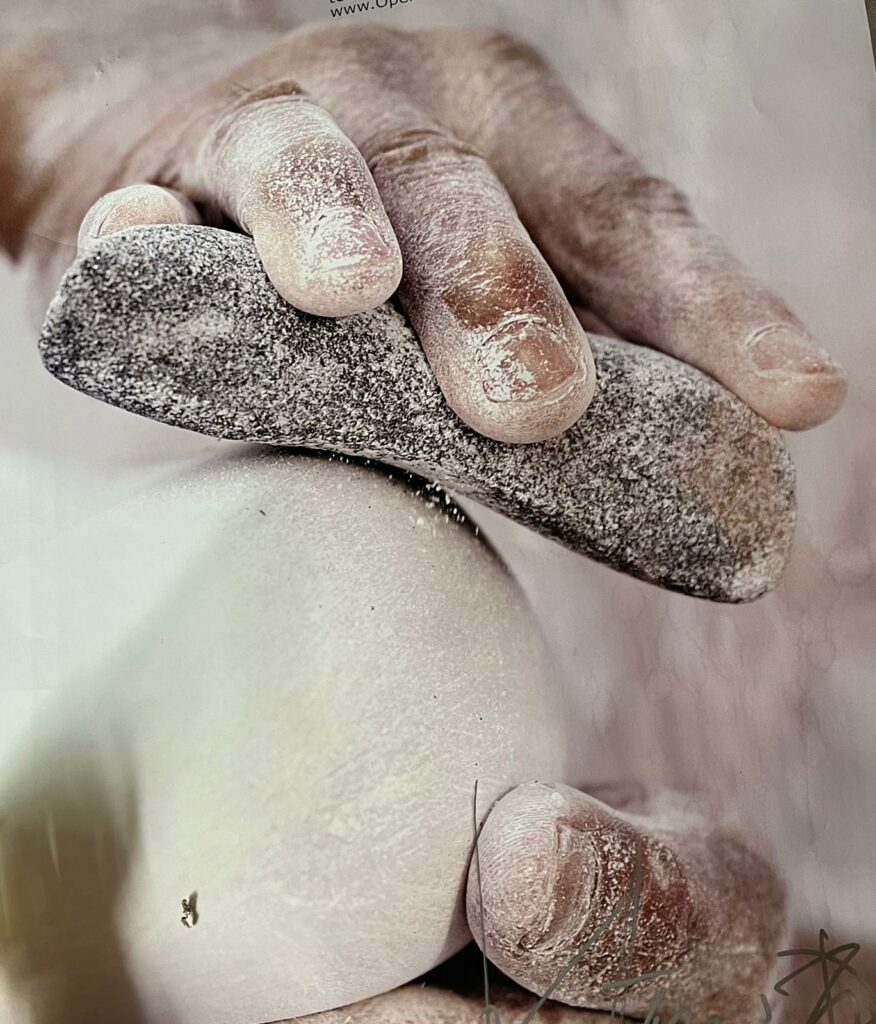
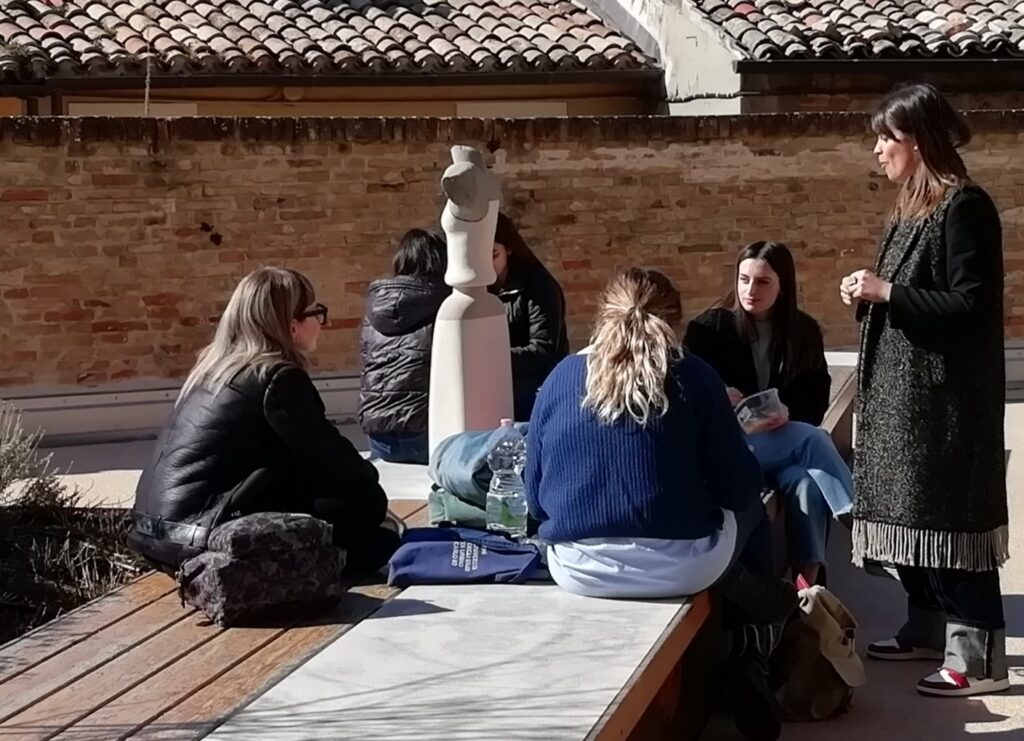
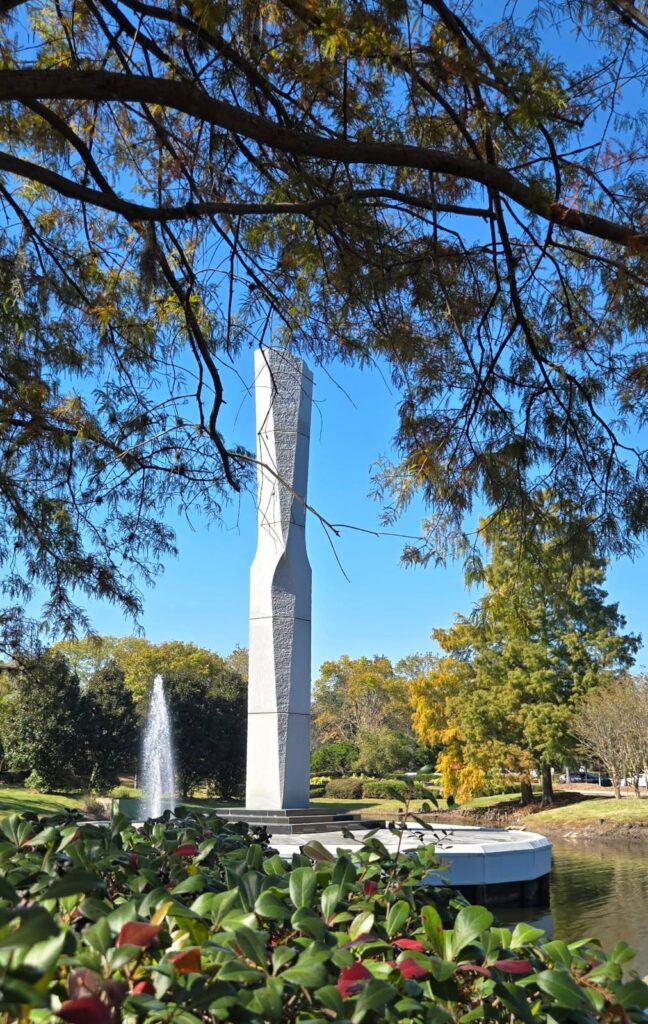
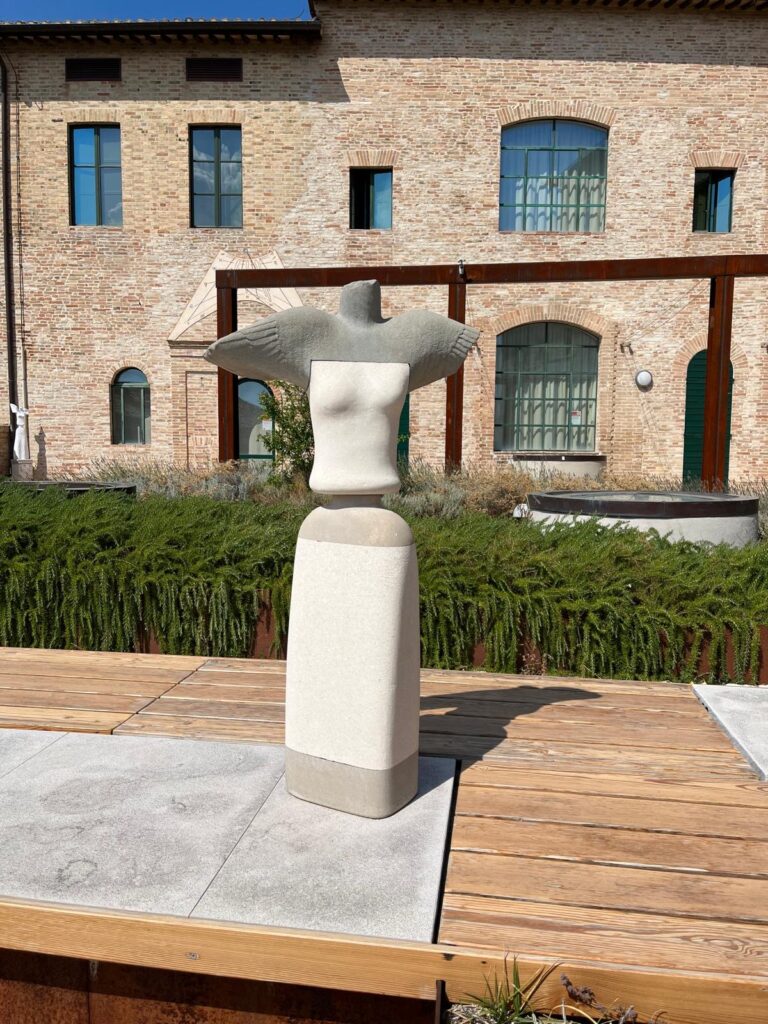
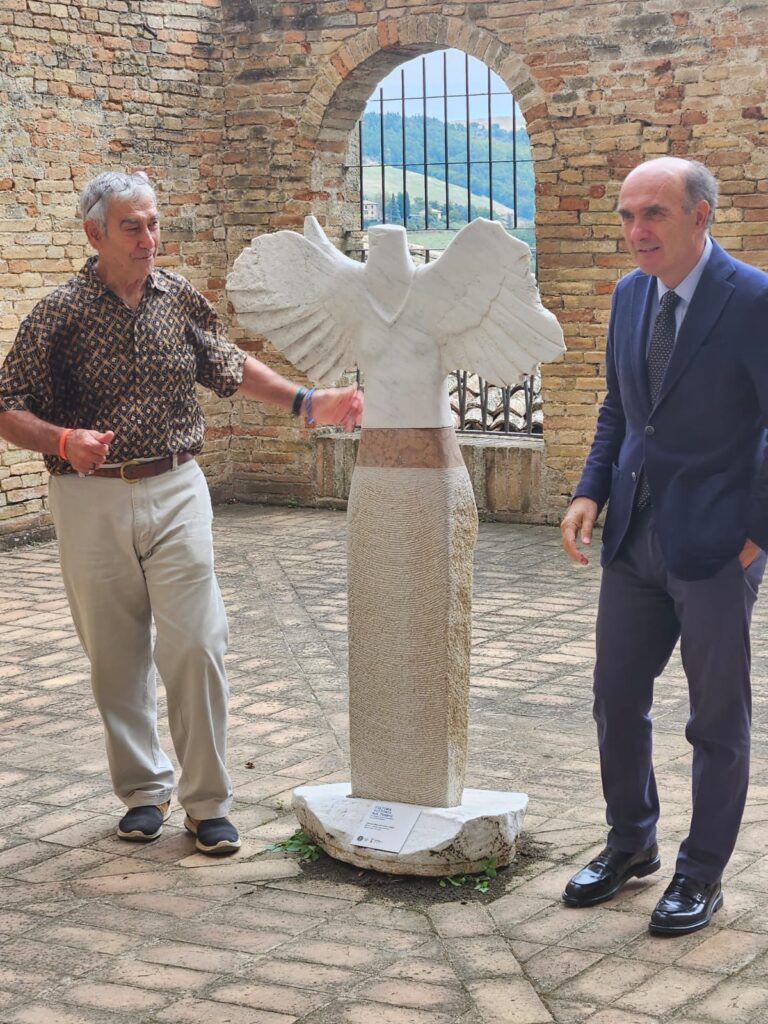
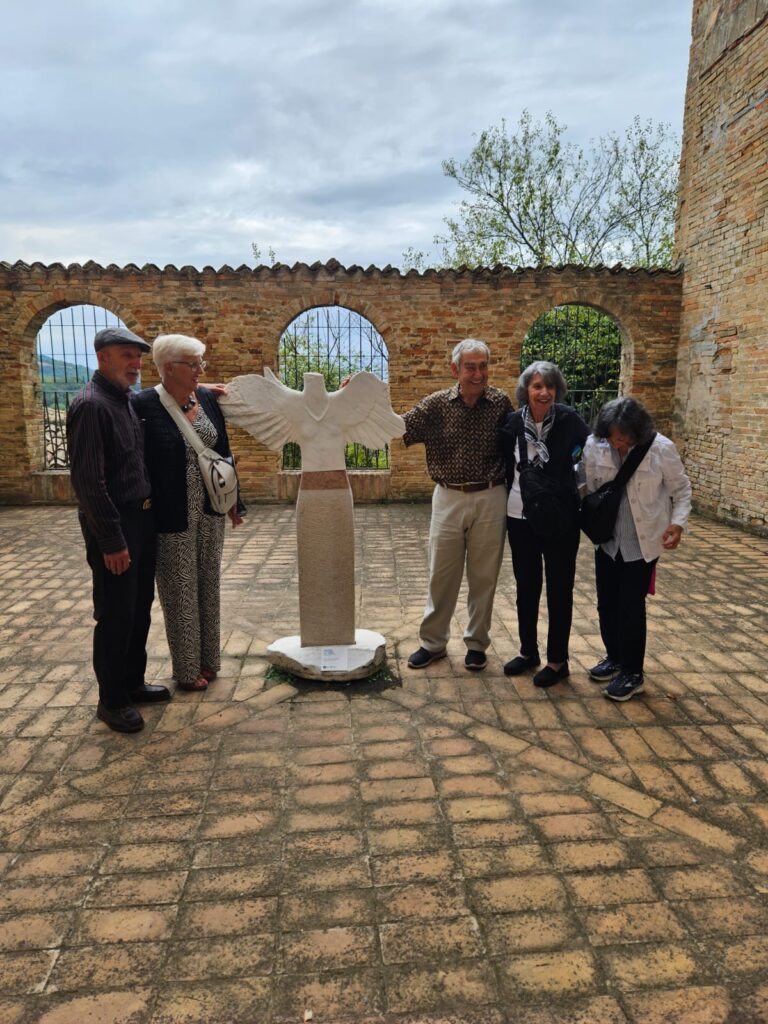
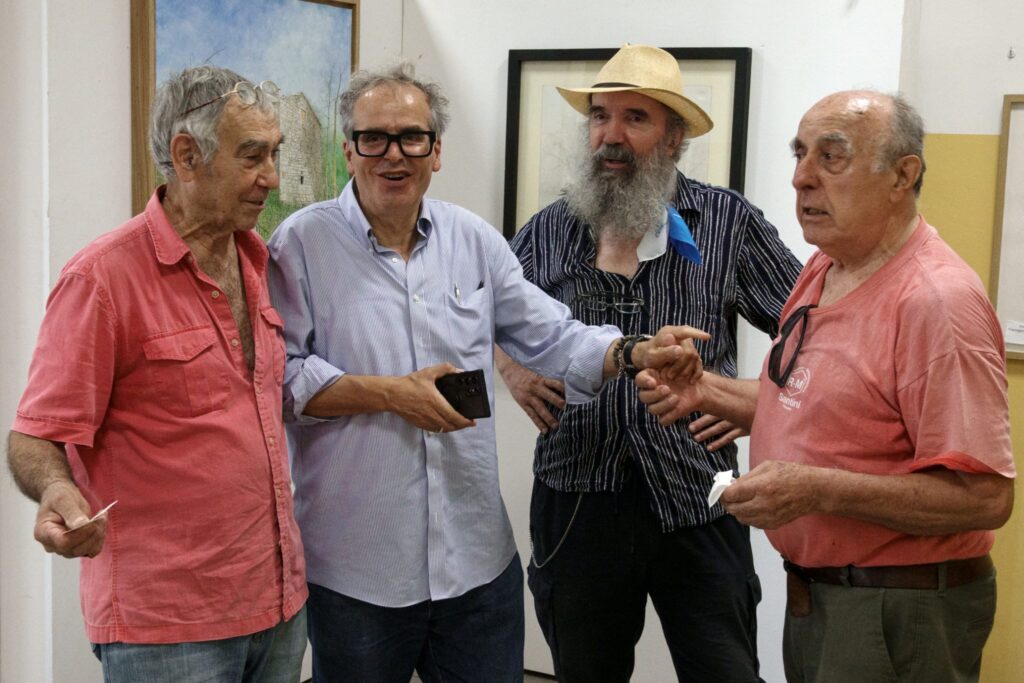
Following graduate school, Torcoletti moved to St. Augustine, Florida, joining the faculty of Flagler College in 1971. For the next thirty-six years he taught sculpture, drawing, and art history, becoming Professor Emeritus upon his retirement in 2007. His influence at Flagler extended beyond the classroom. Torcoletti designed the College’s lion mascot, drawing upon the historic lion imagery found in the architecture of St. Augustine and Flagler’s Ponce de Leon Hall. He also cast the bronze lion incorporated into the College’s ceremonial mace.
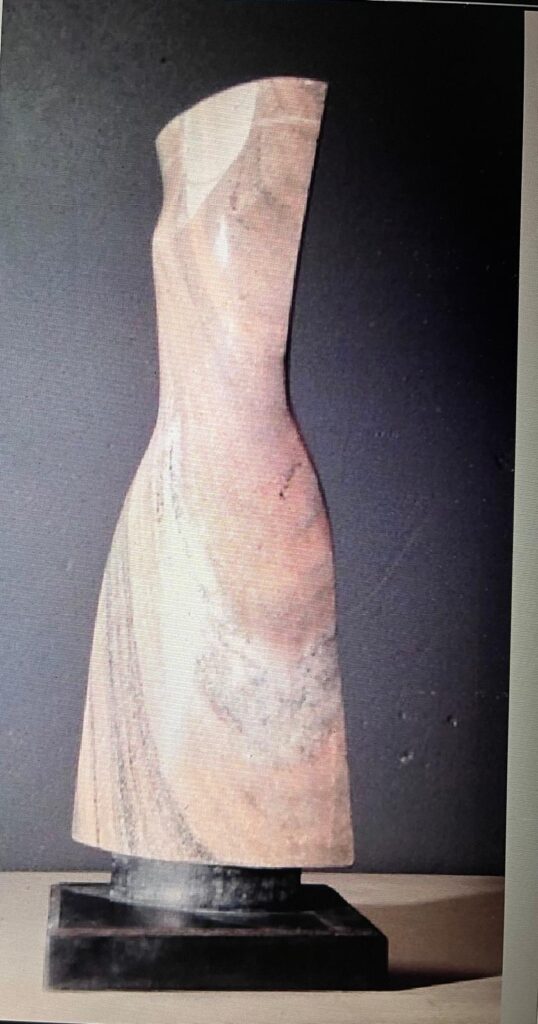
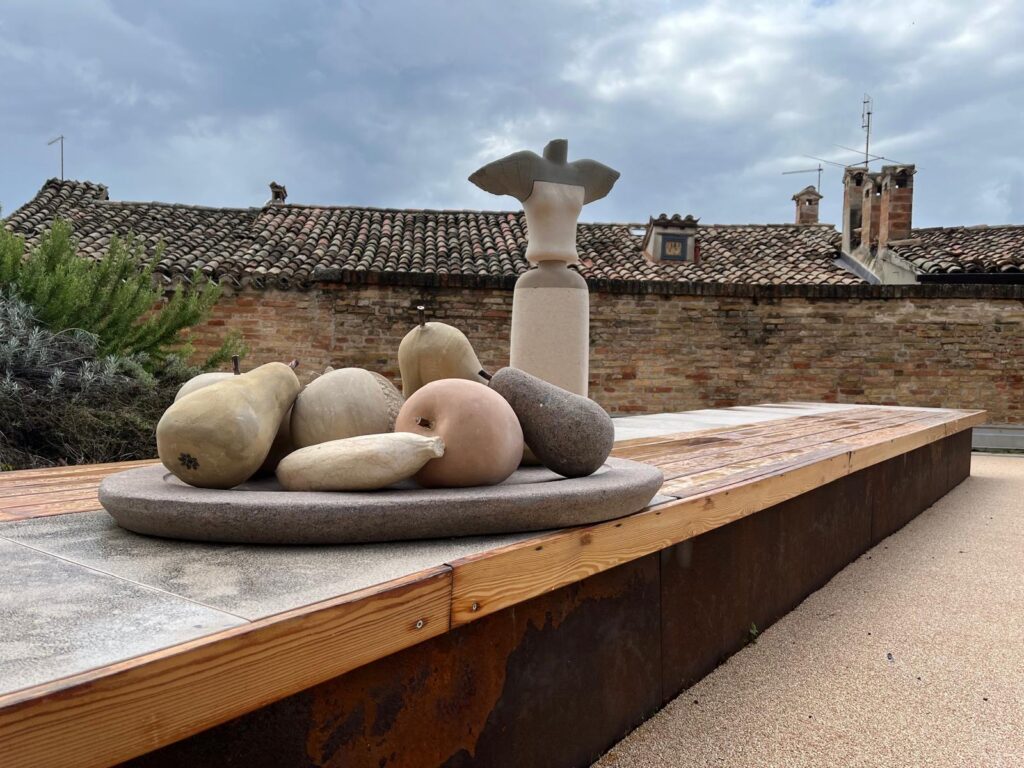
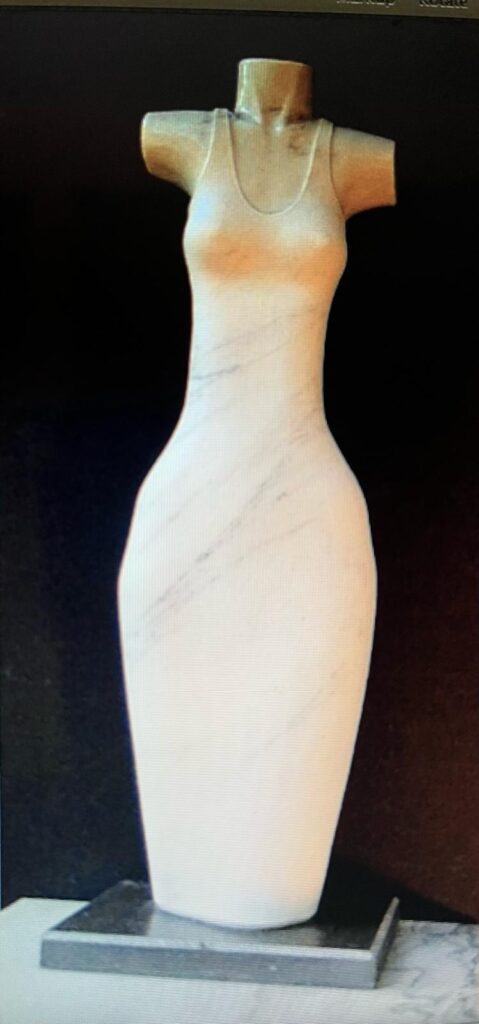
Torcoletti’s personal work encompasses drawing and sculpture in stone, wood, bronze, ceramics, and other materials, although stone carving has occupied an increasingly important place in his work. His sculpture is rooted in the human figure and particularly in fragments of the figure, which he reinterprets through abstraction and simplification. Torcoletti has described these works as contemporary reincarnations of historical sculptural imagery. His interest in stone has taken him to Italy, England, France, Portugal, and Holland, and his favored materials have included marble, granite, and sandstone.
A distinguishing feature of Torcoletti’s practice is his commitment to understanding and controlling the entire sculptural process. Rather than routinely subcontracting the specialized stages of production, he developed proficiency in drawing, carving, moldmaking, wax work, and bronze casting, including both lost-wax and sand-casting processes. This traditional workshop ethic allows him to carry a sculpture from its original conception through fabrication and completion with his own hands.
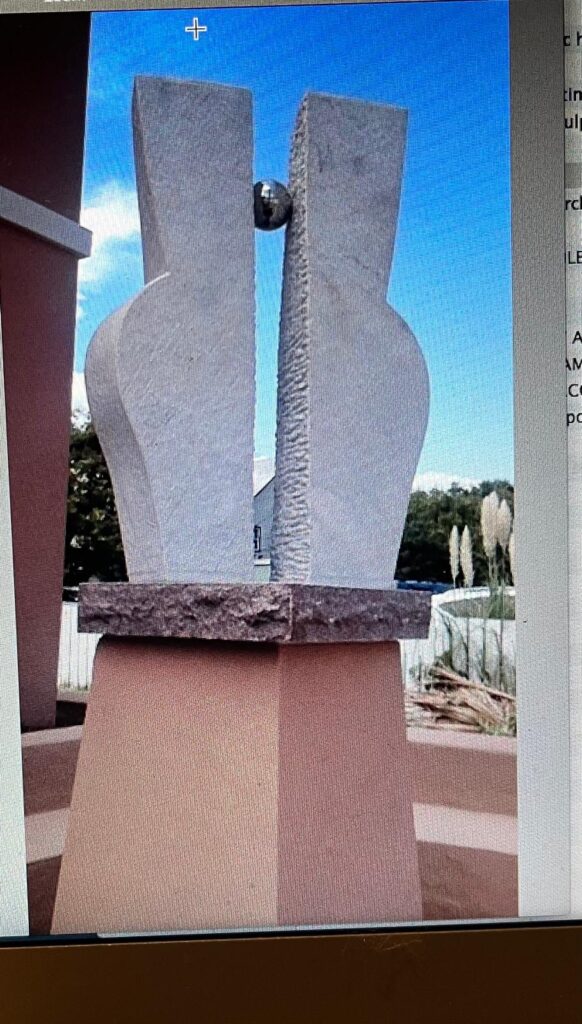
Torcoletti’s work has been exhibited internationally and is represented in numerous public and private collections in the United States and abroad. Among his monumental works is a roughly forty-foot-high, fifty-ton granite sculpture at Kings Hill in Kent, England. His 1999 federal commission, Concurrence Gateway, consists of three ten-foot marble elements and is part of the U.S. General Services Administration Fine Arts Collection. The work explores the relationship between positive mass and negative space through simplified abstractions of the human figure.
Torcoletti also created La Florida, the bronze sculpture presented to inductees into the Florida Artists Hall of Fame, the State of Florida’s highest cultural honor. He began developing the work after being approached by the state in the late 1980s, and the sculpture continues to be presented to Hall of Fame inductees.
His long connection with St. Augustine has also included preservation of its sculptural heritage. In 2011, Torcoletti worked with sculptor and former student Joe Segal on the restoration of the marble lions at St. Augustine’s historic Bridge of Lions.
Torcoletti maintains personal sculpture studios in St. Augustine, Florida, and Abbadia di Naro near Cagli, Italy. His Italian studio is situated at a historic rural property east of Cagli, where he has spent many years working in stone. His continuing relationship with Italy culminated in a major 2023 exhibition at the University of Urbino, Cultura, vittoria sul tempo: Le sculture di Enzo Torcoletti nei cortili di Ateneo — Culture, Victory Over Time: The Sculptures of Enzo Torcoletti in the University Courtyards.
In 2023, Torcoletti was also recognized with the Ambassador of the Arts Award from the Florida Council on Arts and Culture.
His artistic activity has been the subject of numerous articles and has appeared in publications including Deborah C. Pollack’s Florida Sculptors and Their Work: 1880–2020, Arthur Williams’s The Sculpture Reference Book: Contemporary Techniques, Terms, Tools, Materials and Sculpture, and additional sculpture textbooks by Williams.
I have known Enzo Torcoletti since 2013, and every year since then I have had the pleasure of working alongside him at the Sylacauga Marble Festival in Alabama. Anyone who knows Enzo will immediately recognize what I can only describe as his being malignantly cheerful. He greets everyone as though he has known them for a lifetime. After thirty-six years as a professor of Fine Arts at Flagler College, Enzo never really stopped teaching; the classroom simply became wherever Enzo happened to be. He is a consummate teacher, extraordinarily generous with what he knows, and seems genuinely delighted whenever he has an opportunity to pass that knowledge along to someone else.
Watching Enzo work year after year has also given me an appreciation for his remarkable fluency as a stone carver. He invariably produces sculpture to sell during the festival and will commonly complete two or three pieces while he is there. It isn’t simply that he works quickly. There is an economy and confidence in the way he sees a piece of stone and understands what is necessary—and, perhaps more importantly, what isn’t. There is no preciousness about the process. He selects his marble, gets to work, talks and laughs with everyone around him, stops to show someone how a tool is used or explain what he is doing, finishes a sculpture and begins another. After more than half a century as a sculptor, the distance between seeing, deciding and making seems almost to have disappeared. Enzo doesn’t merely possess an enormous amount of knowledge about sculpture; he takes genuine pleasure in giving it away.
In his own Words
Unless I am working on a specific assignment, and because I am very interested in Art history and all sorts of arts and crafts, I tend to experiment and explore various media and techniques, old and new. And because I was born and raised in Italy, I have been influenced by ancient and classical figures and classical fragments all of my life. And, naturally, my work leans not only to the figure but also towards what today we call “the unfinished”. I am particularly interested in the female forms, especially those that have lost limbs and other elements because I have always felt that the body ( torso ) even without the head or the limbs, speaks its own full language. Yes, a sculpture with a face attracts the viewer to those details because face has its power, but it’s a mask. The body has greater truth for me, especially the female form, with its fluid highlights and shadows, and the variety of shapes as one moves about around it . Yes, to me Goddesses are more important than the male Gods.
Perhaps my sculpture derives from prehistory…before the male deities! On the contrary, perhaps it derives from Art History. Mesopotamian and pre-Greek art interest’s me. But even the grandiose Egyptian art which we still have not been able to surpass in either sculpture or architecture. Unlike the superhuman Pharaos, however, I prefer an art that is closer to the human scale. I also like archaeological fragment rather that the complete sculpture, because with their fractures, they display the raw characteristics of the material. In my stone sculpture I also try to leave untouched some traces of the original stone, which I call nature’s touch.
Speaking of the “unfinished”, try to think about the Nike of Samothrace. Even if we could find the missing parts, we would add nothing either to its beauty or its story. There is also another possible thought, that with an “unfinished” sculpture (and on the “unfinished” many pages have been written about in art criticism) whoever is looking at the opus, mentally, participates on its realization. Bernini’s incredibly magnificent sculptures with their immaculate craftsmanship are a feast for the eyes. They are perfectly realized, but the say everything. Their storie they tell are complete and unchangeable. In my work I want to include the viewer, I want the spectator to have something to do, something to add out of their imagination to complete or modify the sculpture.
To all this, I might add the pleasure of finding by chance, in fields, riverbanks or scrap heaps stones to carve with odd shapes and fissure that suggest sculptural possibilities, unlike a perfect block from a quarry that feels mute and too perfect, much like a finished piece that defies violation.
Stone sculpting is a dialogue with the stone and every stone has its own language. I like above all live stone, sandstone, limestone and pietra di Vicenza, which display traces of past existences such as fossilized shells, leaves and insects. These are the stones that suggest more intimate works that remain closer to the human scale and live with you as opposed to the giant monuments.
Studio Directory
Studio Information
- Studio type
- Sculptor Atelier
- Location
- Italy, USA