Practical observations contributed by John Fisher
John Fisher treats finishing as a distinct stage of carving. His sequence moves from hammer and chisel to scraping, then rasping, with each tool continuing to develop the form.
Hand Tools, Scrapers, and Finishing
Practical observations contributed by John Fisher
John Fisher treats finishing as a distinct stage of carving. His sequence moves from hammer and chisel to scraping, then rasping, with each tool continuing to develop the form.
Choosing Hand Tools
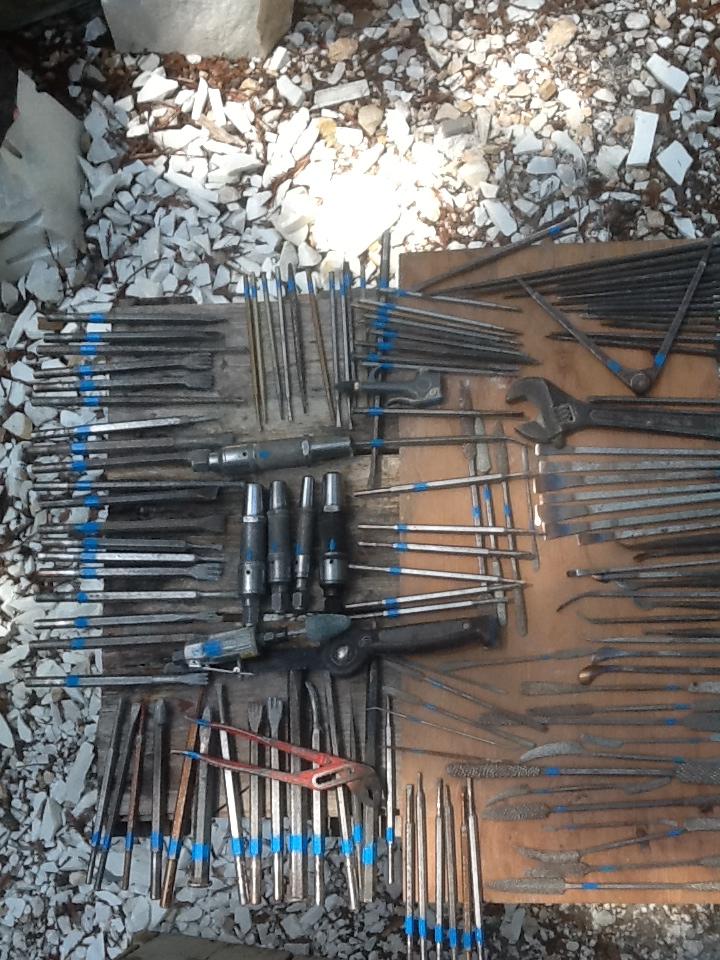
John’s basic selection includes a pitching tool, a long point, several tooth chisels or gradini, rondels, bent chisels, small finishing chisels, and hammers of different weights.
The point is his principal tool for removing stone. The pitching tool serves chiefly at the beginning. He prefers longer chisels because short tools bring his hands too close to the stone.
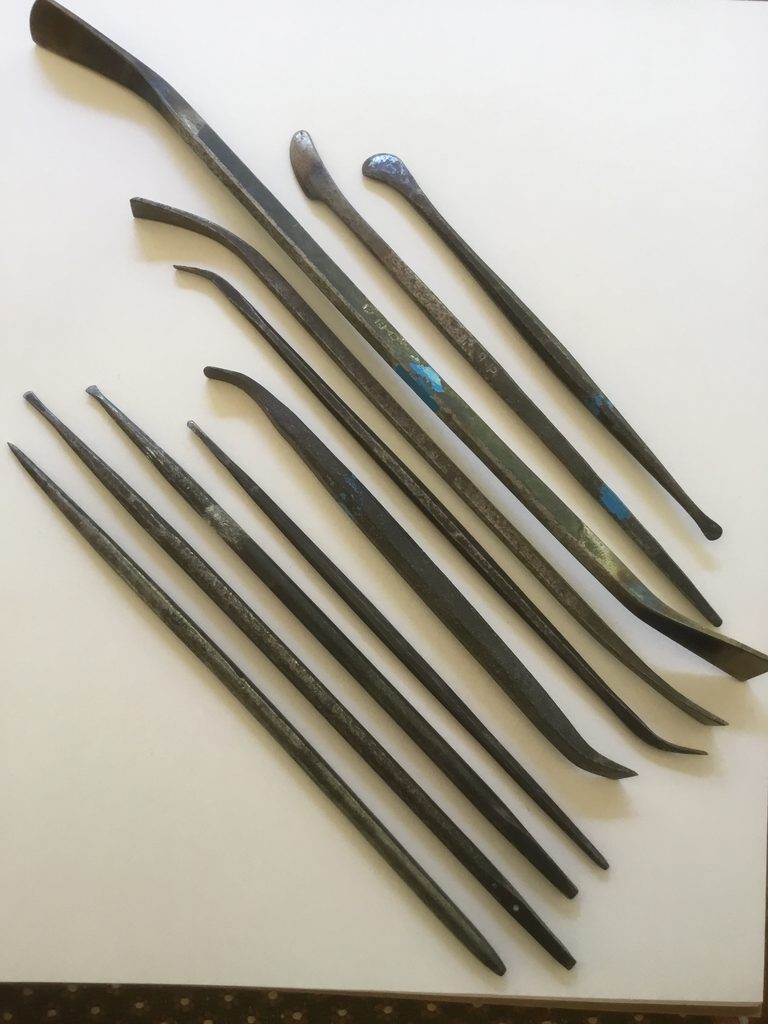
Bent chisels give access behind forms and into places a straight tool cannot reach. John keeps several bends available, from slight to more pronounced.
He particularly values narrow rondels. He identifies a favourite as “#8,” although the supplier’s numbering needs clarification. He describes a cutting width of approximately one-eighth of an inch as useful: excessively wide tools do not readily penetrate, while very small tools are vulnerable to breakage.
Let the Hammer Work
John describes holding the hammer loosely, allowing it to strike and rebound, then catching that rebound for the next stroke.
Match the hammer’s weight and the force of the blow to the chisel. A heavy hammer can bend or break an undersized tool.
His central instruction is that every blow should remove stone. If the chisel stops cutting, change the approach. Continuing to strike the same place can initiate a fracture.
“Remember you are carving, not crushing the stone.”
Tooth Chisels Develop the Form
John uses tooth chisels for modelling rather than heavy roughing out. Keep all the teeth engaged with the surface. Rocking the tool onto an outer tooth can break it.
He reserves fine sharpening for finishing, when the blows become lighter. A finely sharpened edge can break under an aggressive cut.
Scrape Before Rasping
“Before I rasp I scrape,” John explains.
He uses bent tools directly as scrapers and operates others with a lever. Scraping continues the cutting process without a hammer, allowing him to work beneath bruising left by earlier carving.
For leverage, John uses a forked deer antler. He finds that its two or three points of contact provide greater stability than a single stick or brush handle, which can allow the movement to hinge at the wrist.
Work the Rasp Around the Form
John reconsidered rasping after studying the tool-finished sculptures at Staglieno Cemetery in Genoa. He noticed long scratches travelling around the forms and experimented with reproducing that movement.
In his method, much of the work is done with the single row of teeth along the rasp’s edge. He holds the tool with both hands and pushes it away from himself, following the form.
He reserves the broader toothed faces for situations that require them, preserving their cutting surfaces.
The direction of the rasp stroke becomes part of developing the sculpture: the tool follows the volume rather than merely smoothing an isolated patch.
Finishing as Continued Carving
John’s account concentrates on a tool-finished surface. Scrapers and rasps refine the volumes while leaving evidence of the sculptor’s work.
For him, finishing remains an active part of carving—another opportunity to clarify the form.
Read More –>

The Last Cut
John Fisher on Hand Tools, Scrapers, and Finishing
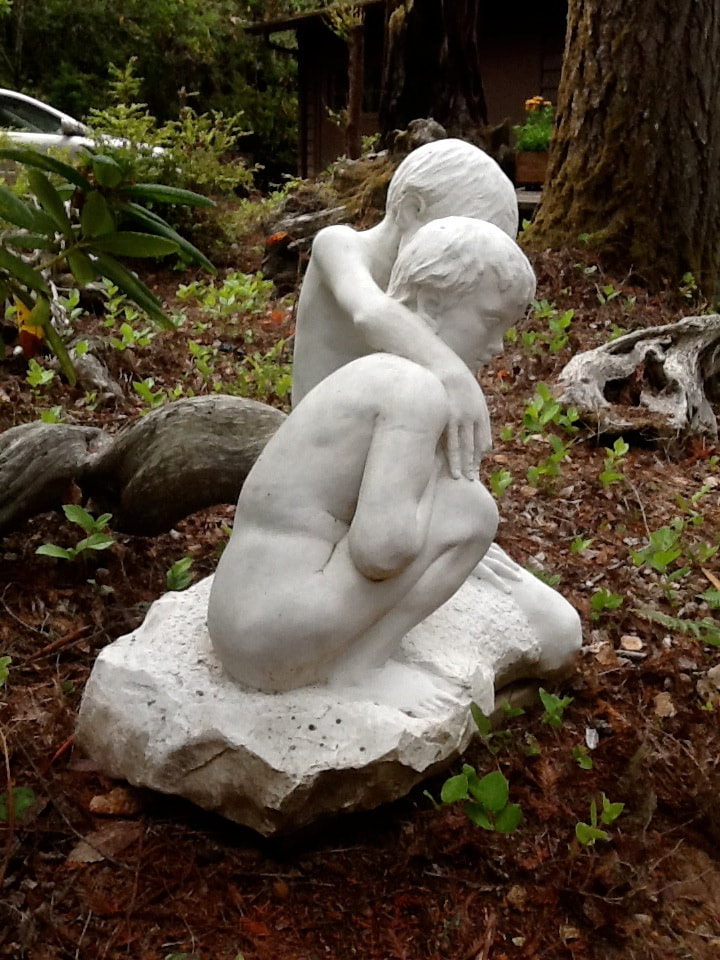
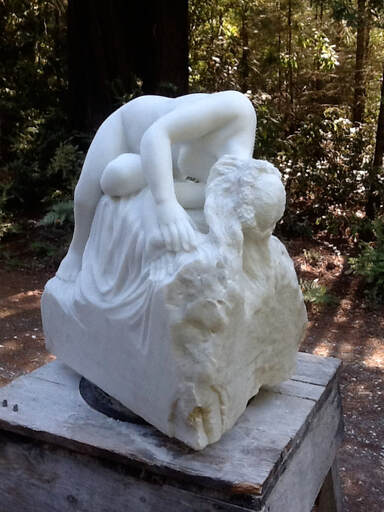
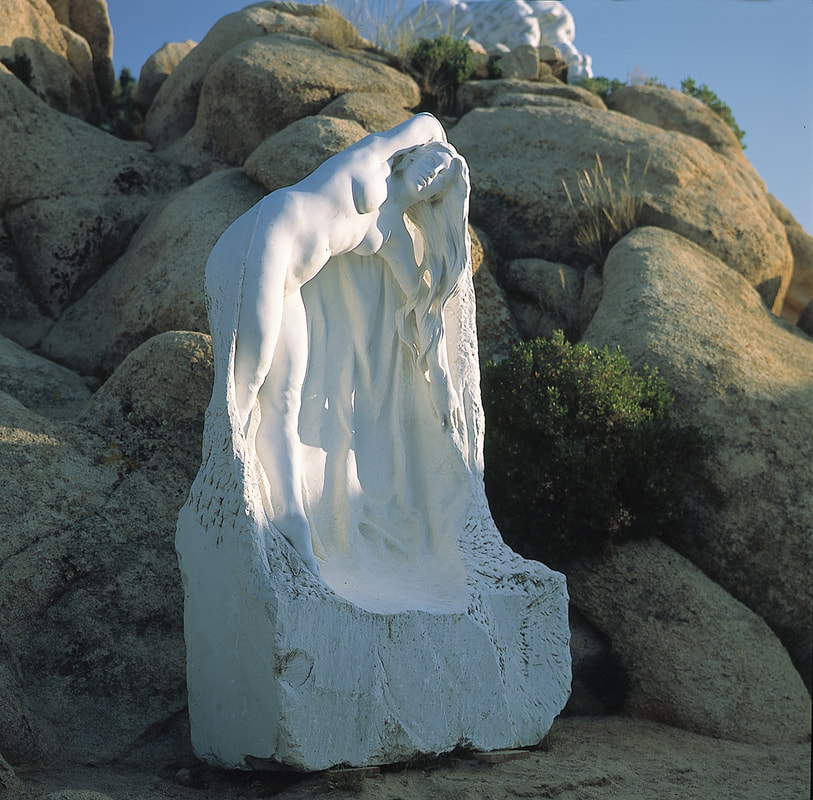
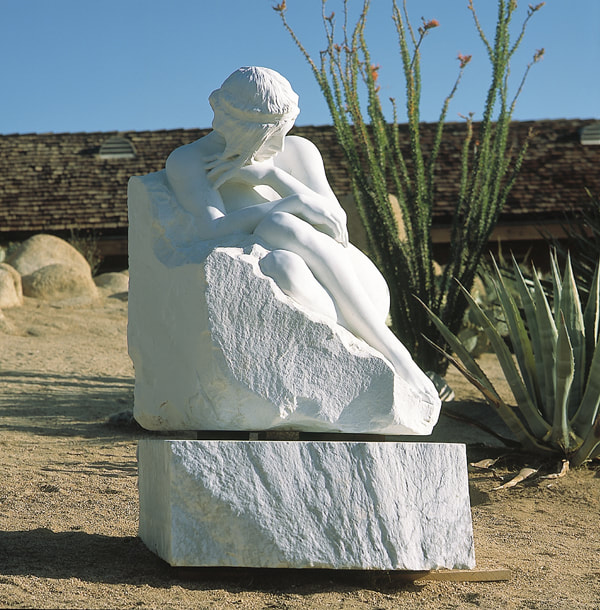
The figure has emerged. The great weight of waste stone is gone. Light begins to travel across a shoulder, turn beneath an arm, and settle into the spaces the sculptor has opened. It is tempting to think the carving is finished.
For John Fisher, another kind of work is beginning.
“Finishing is a whole other job,” he writes. “Before I rasp I scrape.”
That short statement opens a door into a practice rarely explained to beginners. Between the hammer’s last blows and the finished surface lies a patient succession of cuts. The tools become quieter. The pressure becomes more measured. The sculptor is still finding the form.
John continues carving without a hammer, using scrapers to work beneath the bruising left by earlier blows. Bent tools reach behind a curve or into a recess. Other tools work with a lever. Where an Italian carver might use the handle of a brush, John uses a forked deer antler.
It is an unexpected object in a marble workshop, but his reason is practical. A stick can let the movement hinge at the wrist. The antler provides two or three points of contact, giving him a more stable purchase. The choice comes from feeling what happens between hand, tool, and stone.
That attention runs through his advice. He prefers long chisels because short ones bring the hands too close to the work. He keeps several tools of the same size so that when one heats up, another is ready. Different bends let him reach around forms. Different hammer weights let him adjust the force.
Each tool has a job, and each asks something different of the hand.
The point does most of his stone removal. The pitching tool belongs chiefly to the beginning. Tooth chisels develop the form, with all their teeth touching the surface; rocking onto an outer tooth invites breakage. Fine cutting edges come into their own when the blows grow lighter.
Even the hammer requires restraint. John describes a loose grip: deliver the blow, catch the rebound, and let that returning movement prepare the next stroke. When the chisel ceases to remove stone, striking harder is no answer. Repeated blows in one place can start a fracture. The carver must change the approach.
“Remember you are carving, not crushing the stone.”
His thoughts about rasping began with a similar willingness to reconsider what he had been taught.
He had learned to push a rasp in one direction. But after questioning his use of chisels, he began to question the rasp as well. What else had he accepted without understanding?
At Staglieno Cemetery in Genoa, he found something that held his attention: long tool marks travelling around sculpted forms. He studied those scratches. How had the carvers made them? How had their hands moved?
Back at work, he experimented.
Instead of relying chiefly on the broad toothed faces, he used the single row of teeth along the rasp’s edge. Holding it with both hands, he pushed away from himself and followed the curve. He began to obtain the effect he had seen at Staglieno.
The marks were a record of movement. By studying them, he could follow another sculptor’s work across the stone.
There is something compelling about that exchange. A carver leaves a surface. Years later, another carver looks closely enough to ask how it was made. An apparently ordinary scratch becomes instruction.
John’s account brings us back to the workshop with sharper eyes. A scraper can continue the carving beneath a bruised surface. The narrow edge of a rasp can carry a stroke around a volume. A forked antler can steady the hand. Small discoveries accumulate into control.
And finishing deserves that control. Every passage of the tool changes how the light meets the sculpture. A shoulder can become more convincing. A transition can become more delicate. A form that seemed settled can reveal that it still needs work.
The hammer falls silent, but the carving continues.