John Fisher on sawmills, cutting costs, and preparing marble for carving.
A promising piece of marble is only the beginning
John Fisher on Sawmills and Stone Preparation
A promising piece of marble is only the beginning. Before it reaches the sculptor’s workstand, decisions about cutting and preparation will change its shape, its price, and the possibilities it holds.
John Fisher’s advice begins at the sawmill office.
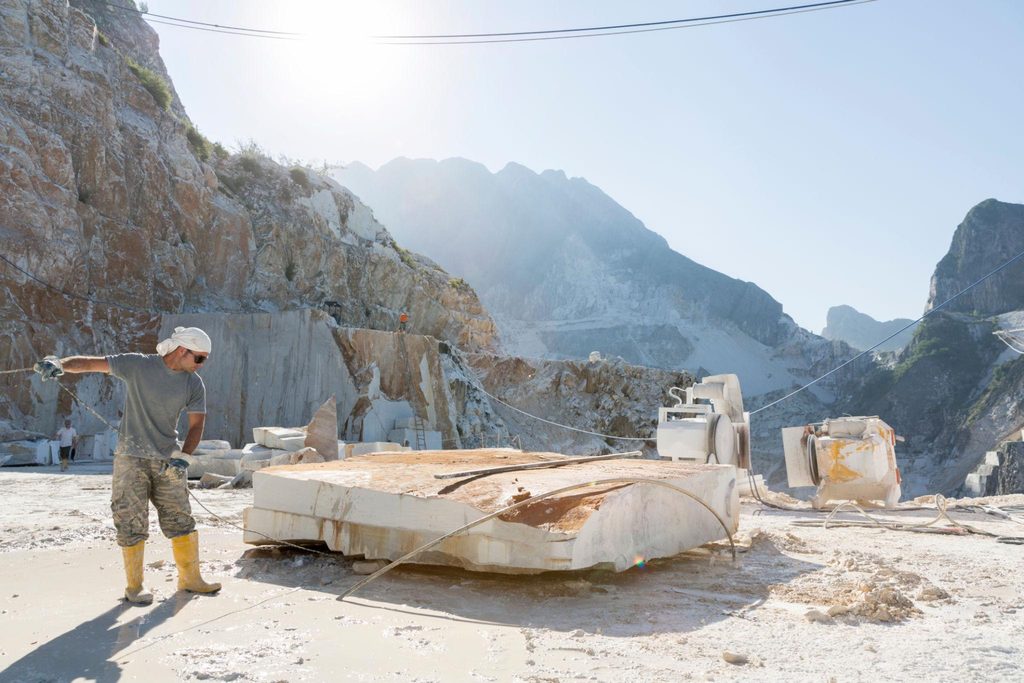
Ask permission before entering the yard. Explain what you are looking for. The blocks surrounding you may already belong to clients, and the moving cranes and heavy stone make this a working place that requires attention.
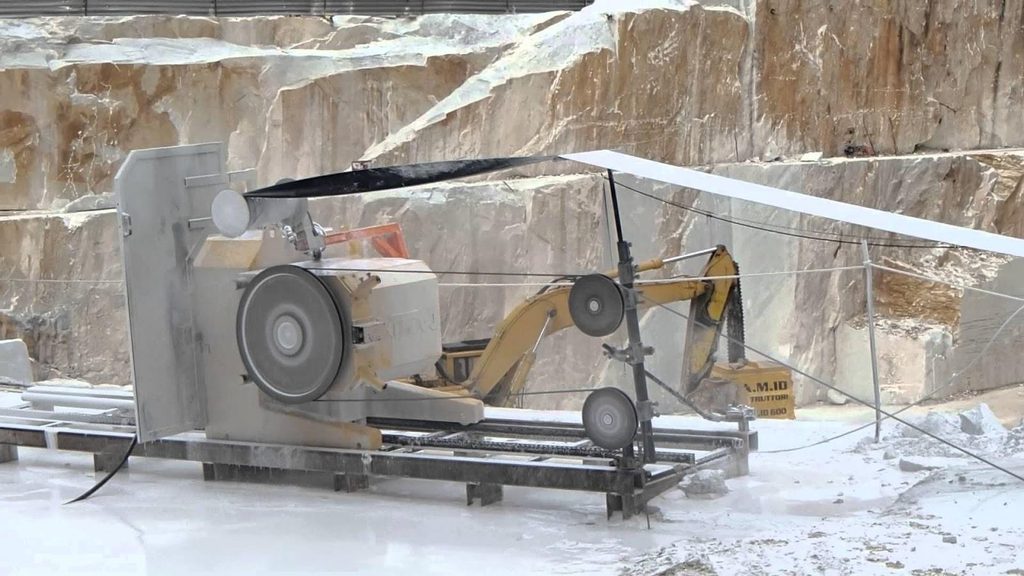
Years spent around Pietrasanta have taught John to look beyond the neatly squared blocks. Sawmills may have offcuts and irregular pieces in many shapes and sizes. Some contain defects; others may offer enough sound marble for a worthwhile sculpture. Where space is limited, scraps may go straight into dumpsters rather than being kept for sale.
Availability depends on the business. Introduce yourself and ask.
Read the Stone Before You Cut
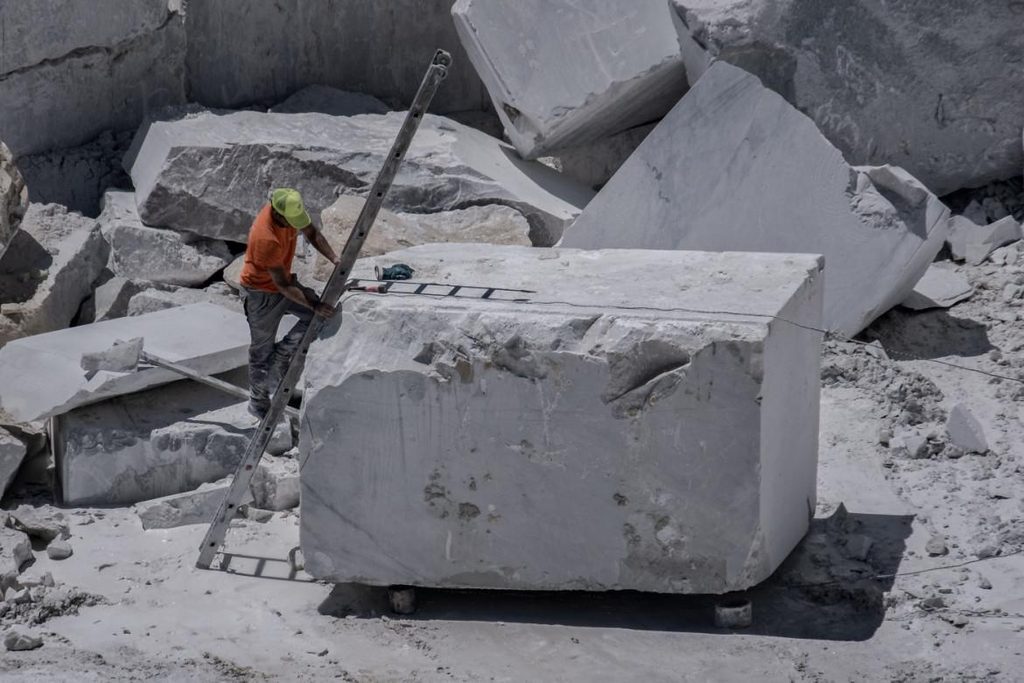
A squared block is easier to measure and assess. An irregular block takes more looking.
For John, that uncertainty can also be exciting. The existing shape may suggest a direction for the sculpture. A projection, a slope, or an unexpected thickness can become useful once he begins exploring the stone.
Cutting it into a regular rectangle may simplify the work, but it also removes material and adds expense.
“There is a price for every cut,” he writes.
The question is practical: what will this cut accomplish? Will it establish a stable base, remove unusable material, or bring an oversized block within the studio’s handling capacity? Each decision should serve the work.
Ask for the Cutting Price First
John recalls charges of approximately €200 for a cut under one square metre, with larger cuts costing more. This is his recollection, rather than a current quotation.
Before authorizing the work, ask the sawmill to price the specific cuts you need. Give clear dimensions and agree on which faces will be cut. Several seemingly modest alterations can substantially increase the cost of an inexpensive block.
The purchase price is only the first figure in the calculation.
Establish the Bottom
When preparing an irregular block, John first decides which surface will become its bottom.
Having that face sawn flat provides a dependable starting point for positioning the stone. He notes that a sawmill can produce a genuinely flat base—an advantage when the block must stand securely for carving.
This decision deserves care. Choosing the bottom also establishes an orientation. Consider the stone’s working directions, its defects, and the form you may develop before committing to the cut.
Arrange the Next Move
The sawmill may be able to put you in touch with someone who can transport the block to your workspace. John recommends asking rather than assuming that delivery is included.
Know the block’s dimensions and obtain its weight before arranging the move. Make sure the receiving studio can unload it and accommodate it.
As John observes, buying the stone begins a succession of expenses: cutting, transport, tools, and eventually crating or shipping. Planning the next step before purchasing helps keep those costs manageable.
Prepare What the Work Requires
John’s experience encourages a measured approach. Find a promising piece, examine it carefully, and decide which preparation will actually help you carve it.
A flat bottom may be essential. Other cuts may be worth postponing until you understand the block better.
At the sawmill, the sculpture’s future is already being shaped. Every cut spends money and removes stone. Give each one a purpose.
Source notes
Adapted from John Fisher’s email correspondence with Peter Forster, October 8–10, 2026. Based on Fisher’s firsthand experience purchasing and working marble around Pietrasanta. Cutting prices reflect his recollections and should be confirmed with the sawmill.